By 2025, tech jewellery will have become a key part of the UK luxury market, with London leading the way. What started as plastic wristbands and bulky fitness trackers has evolved into pieces that fit right in at Hatton Garden, Selfridges, and top online boutiques. Now, buyers are asking not if technology belongs in fine jewellery, but which type best suits the recipient’s lifestyle, style, and values.
Three main factors have driven this change. First, new materials and smaller electronics let makers hide sensors, antennas, and batteries inside solid gold, platinum, or ceramic without losing strength. Second, there’s a growing demand for jewellery that looks traditional but quietly handles tasks like heart rate tracking or contactless payments. Third, today’s shoppers care about sustainability, expecting their diamonds, metals, and tech to be ethically sourced and, when possible, climate positive.
In this setting, tech jewellery gifts fill a unique role. One piece can offer meaning, status, and everyday function. For example, an 18-carat gold smart ring tracks sleep without a bright display. A carbon-negative diamond solitaire can spark conversations about climate at dinner. A delicate bracelet can also serve as a quiet safety device for a student going out at night.
This guide, focused on London’s historic jewellery quarter and the wider UK market, highlights the top tech jewellery gift ideas available now—from high-end biometric rings to NFC lockets that hold digital memories. It’s for readers who want to know not just what’s out there, but why these pieces are now central to modern luxury in 2025.
Invisible Utility, Quiet Luxury, And The New Design Language
Early wearables stood out with rubber straps, flashing screens, and big logos. In 2025, though, the focus is on subtlety. The best smart jewellery now fits in at both the office and formal events. A ring should look natural next to a wedding band, and a safety pendant should appear as a simple charm, not a gadget.
This fits well with the wider trend of quiet luxury. In London, people now show wealth through quality materials and craftsmanship instead of big logos. Buyers who would avoid plastic wristbands are happy to wear a bold signet ring or a sculpted chain that includes a hidden sensor. This change has finally given hardware engineers the chance to work at scale.
Chunky styles and bold signet rings, now popular again, have enough space to hide batteries and motion sensors without changing their look. Large chains can also hide NFC modules in extra links. In contrast, traditional fine jewellery often doesn’t have room for tech—a thin filigree ring simply can’t hold a charging circuit.
Colour rules have also become more flexible. London stylists now suggest mixing yellow gold, rose gold, white gold, and platinum. Tech jewellery brands have followed suit, offering smart rings in many finishes or, for high-end pieces, making casings from solid precious metals to match classic jewellery. Vintage styles matter too. Art Deco and Victorian touches, like milgrain edges and geometric shapes, show up in designs that hide circuit boards behind enamel, appealing to those who want a sense of history even in modern pieces.
Sustainability And High Tech Stones For Ethical Gifting
Ethical London buyers now look for more than just recycled packaging. In 2025, sustainability in jewellery often means using technology in the materials themselves. This is especially clear with the rise of lab-grown diamonds and new atmospheric carbon stones.
Lab-grown diamonds have moved from being controversial to a common choice for UK engagement rings. These stones let buyers get better clarity or bigger sizes for the same budget, making it easier to customise settings or add electronics. For tech jewellery, this means the stone is a design choice, not just a fixed cost. Shops in Hatton Garden now often offer carbon-neutral lab-grown diamonds, pairing them with recycled metals and digital design tools.
Atmospheric diamonds, made from carbon captured from the air, are at the forefront of innovation. Brands like SkyDiamond now offer these gems to UK buyers, showing that they are chemically the same as mined diamonds but have a net negative climate impact. The process uses carbon dioxide from the air, renewable energy, and special equipment to grow crystals, which are then set in recycled gold or platinum. Here, the real tech breakthrough is in how the stone is made, not in a chip or circuit.
For gift buyers, these materials offer more than just peace of mind. They tell a story. A carbon-negative solitaire or a lab-grown diamond with a digital record becomes a symbol of innovation and values, adding to the traditional story of love and commitment.
Fun fact: Some makers of atmospheric diamonds say each carat removes more carbon from the air than a petrol car emits on a round trip between London and Edinburgh. This makes a pendant a real conversation starter about climate action.
Smart Rings From Haute Joaillerie To Everyday Sleep Tracking
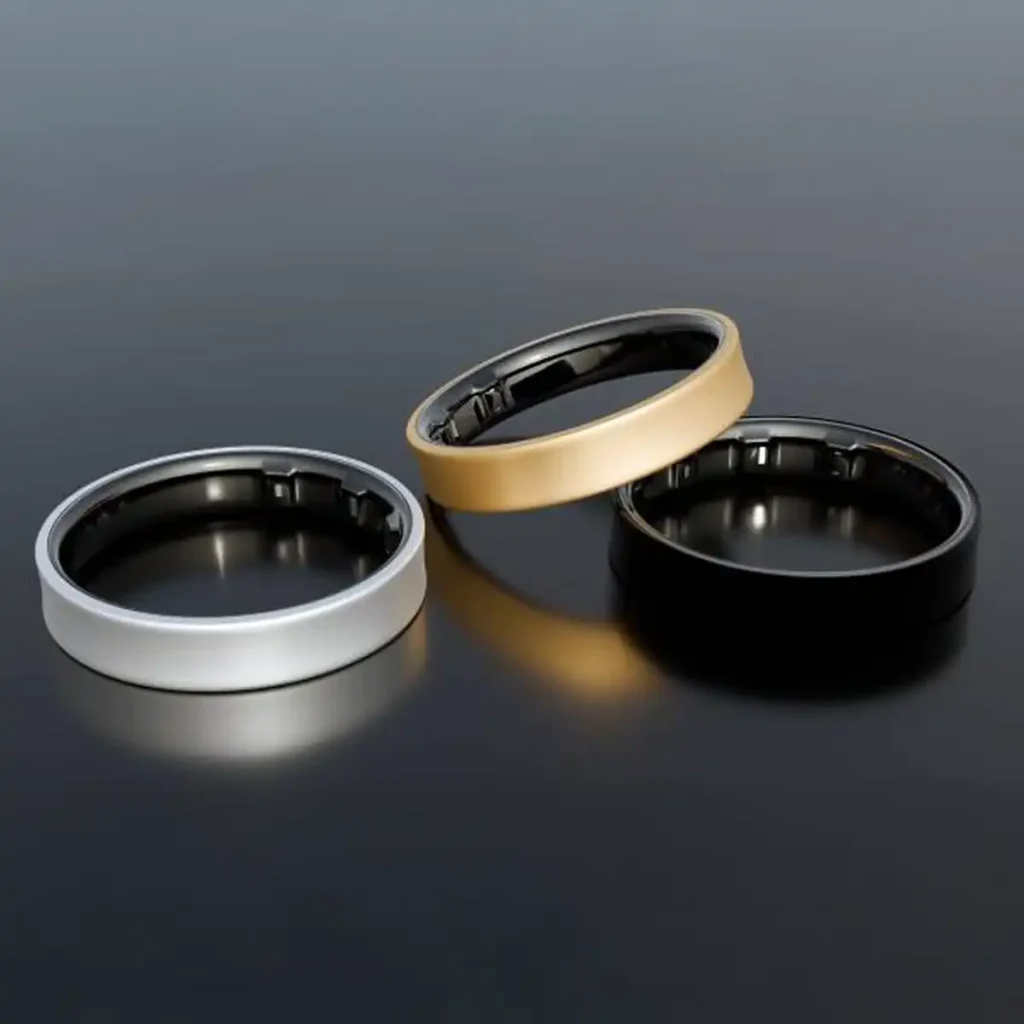
Among all categories, smart rings have become the signature format for tech jewellery gifts. They retain the intimate symbolism of a band, avoid the distraction of a wrist screen and keep the hand free for analogue watches and bracelets. In 2025, the spectrum ranges from ultra-luxury solid gold and platinum pieces to discreet titanium and aluminium designs focused on everyday wellness.
At the very top of the market sits an emerging class of rings that treat electronics as a single layer within a traditional fine jewellery object. Collections such as Ultrahuman’s high-end precious metal rings are machined from solid 18-carat gold or platinum rather than plated base metals. They are hallmarked, sourced through recognised bullion channels, and finished with brushed textures or high-polish hues that would not look out of place in a Mayfair showcase. Inside, they carry clinical-grade optical sensors for heart rate and oxygen saturation, contactless skin-temperature sensors, and multi-axis motion units for activity tracking. Despite the metal density, battery life can stretch to almost a working week, thanks to efficient firmware and careful antenna design.
What distinguishes this segment is not only the material but the software model. Lifetime access to advanced analytics, such as circadian rhythm guidance or personalised caffeine timing, is often bundled into the purchase, avoiding the subscription fatigue associated with many rival wearables. That makes these rings particularly attractive as gifts for partners or parents who value longevity and dislike ongoing charges.
Further down the price ladder, but still firmly in the premium category, are devices like the Oura Ring. Constructed from titanium with hardwearing gold, rose gold, silver, or dark finishes, they are shaped to mimic a minimalist wedding band. The most recent iterations have refined the interior to remove pronounced sensor bumps and incorporate multiple optical pathways, ensuring readings remain reliable even when the ring rotates on the finger. Their strength lies in mature algorithms for sleep staging and recovery scores. The trade-off is that much of that functionality sits behind a modest monthly subscription, something gift givers should factor in by prepaying several months or explaining the ongoing cost.
For recipients who dislike bulk, slimline smart rings in aluminium and carbon fibre offer another path. With profiles closer to a classic stacking band and weights measured in just a few grams, they lean into utility features such as haptic alarms, vibration notifications and physical buttons to trigger timers or control media. These designs prioritise clever ergonomics over fine jewellery codes, making them ideal for tech enthusiasts who want something they can wear to the gym or on a run without worrying about scratching gold.
Payment Rings And Passive Tech For Frictionless Daily Use
A separate but closely related category covers payment rings and passive NFC wearables. Where health tracking rings rely on sealed batteries and Bluetooth connections, payment-focused devices use simple NFC tags and external tokenisation platforms to confer contactless capability with no charging at all.
Following the closure of early pioneers in the UK market, the field has consolidated around smaller specialists working with aggregators such as Curve. Brands like CNICK produce ceramic and wood rings that combine bank card functionality with, in some models, the ability to act as a key for compatible electric vehicles. The wooden pieces in particular stand out in a crowded field, offering a warm, organic appearance rather than the classic metallic look of most tech jewellery. As gifts, they appeal to commuters who want to glide through ticket barriers or pay in coffee shops with a discreet hand gesture.
Nordic makers such as Tapster concentrate on hardwearing ceramic bands and watch straps that embed NFC modules into scratch-resistant shells. Because these devices contain no battery, their appeal lies in reliability and simplicity. Once linked to a payment token, they continue to work so long as the underlying card remains valid. For buyers, the attraction is obvious: a one-off purchase that turns a favourite analogue watch or minimalist band into a permanent contactless companion.
Safety And Intimacy In Connected Necklaces And Bracelets
While rings dominate discussions of biometrics and payments, necklaces and bracelets have emerged as the main canvas for emotional and safety-driven tech jewellery. Here, the emphasis is less on metrics and more on connection and reassurance.
The Callie safety bracelet, developed by a UK worker safety specialist, wraps a sophisticated personal alarm in a charm that would not look out of place in a contemporary high street collection. A small geometric module, available in sterling silver, gold-plated or rose gold-plated finishes, clips onto chains or bangles. A discreet tap sequence on the charm sends an alert from the paired phone, sharing live location data with nominated contacts. Another sequence can trigger a fake incoming call, giving the wearer a graceful way out of uncomfortable encounters. The internal battery is designed to last around a year and is replaceable, removing the need for nightly charging rituals. For families, this is a compelling gift for students or solo travellers, offering practical protection without signalling surveillance.
Similar concepts exist internationally under brands such as Invisawear, featuring larger crystal-set pendants and keychains tailored to different tastes. The core idea remains constant: safety disguised as jewellery.
On the intimacy side, brands like Totwoo have carved out a niche with paired bracelets and pendants that use haptics and light to signal affection across distance. The popular Sun and Moon sets pair Mother of Pearl and dark stones in stainless steel or plated frames. When one partner taps their piece, the other feels a gentle vibration and sees a glow, regardless of where they are in the world, provided the devices remain connected to phones. Accompanying apps allow secret messages and anniversary reminders that sync with the jewellery’s behaviour. These objects may not meet the strictest definition of fine jewellery, but as relationship-focused gifts, they resonate strongly with couples who spend long periods apart.
Atmospheric Diamonds Lab-Grown Rings And Algorithmic Design
In parallel with electronics, a quieter revolution is underway in how jewellery is imagined and manufactured. Here, technology shapes both the gemstone and the setting's form.
Atmospheric diamond makers use carbon capture systems, renewable energy and high-pressure equipment to grow stones from airborne carbon. Once cut and polished, these diamonds are physically indistinguishable from mined stones. The difference lies in their environmental narratives and supporting infrastructure. Showrooms in central London showcase minimalist pendants and solitaires set in recycled gold and platinum, as well as bespoke engagement rings that blend traditional silhouettes with this cutting-edge material story. For eco-focused recipients, such pieces make ideal tech jewellery gifts, combining old-world romance with new-world engineering.
Hatton Garden firms specialising in lab-grown diamonds have also embraced digital craft. Retailers now routinely invite clients to sit with designers in front of CAD screens, tweaking band widths, claw shapes and shoulder profiles in real time. 3D-printed wax or resin prototypes, produced on-site, can be tried on before casting. This closes the gap between imagination and reality and reduces waste, since poorly fitting or unpopular designs need not be made in metal at all.
Beyond traditional solitaires, some studios build collections around generative design, using algorithms inspired by coral growth, cellular division or natural tessellations to create complex lattice structures. These forms are often impossible to carve by hand and must be realised using 3D printed wax for casting or direct metal laser sintering. The result is jewellery that looks like an organic sculpture yet is rooted in mathematical rules.
For time-poor or high-net-worth clients, mobile designers bring this tech stack into the home. Equipped with laptops, 3D visualisation tools and portable scanners, they conduct consultations at kitchen tables and boardrooms. A resin prototype can be couriered within days, allowing the gift giver to present the design stage itself as part of the present.
Payment Wearables And NFC Lockets Beyond The Finger
Rings may be the most obvious carriers of payment technology, but other wearable form factors are catching up.
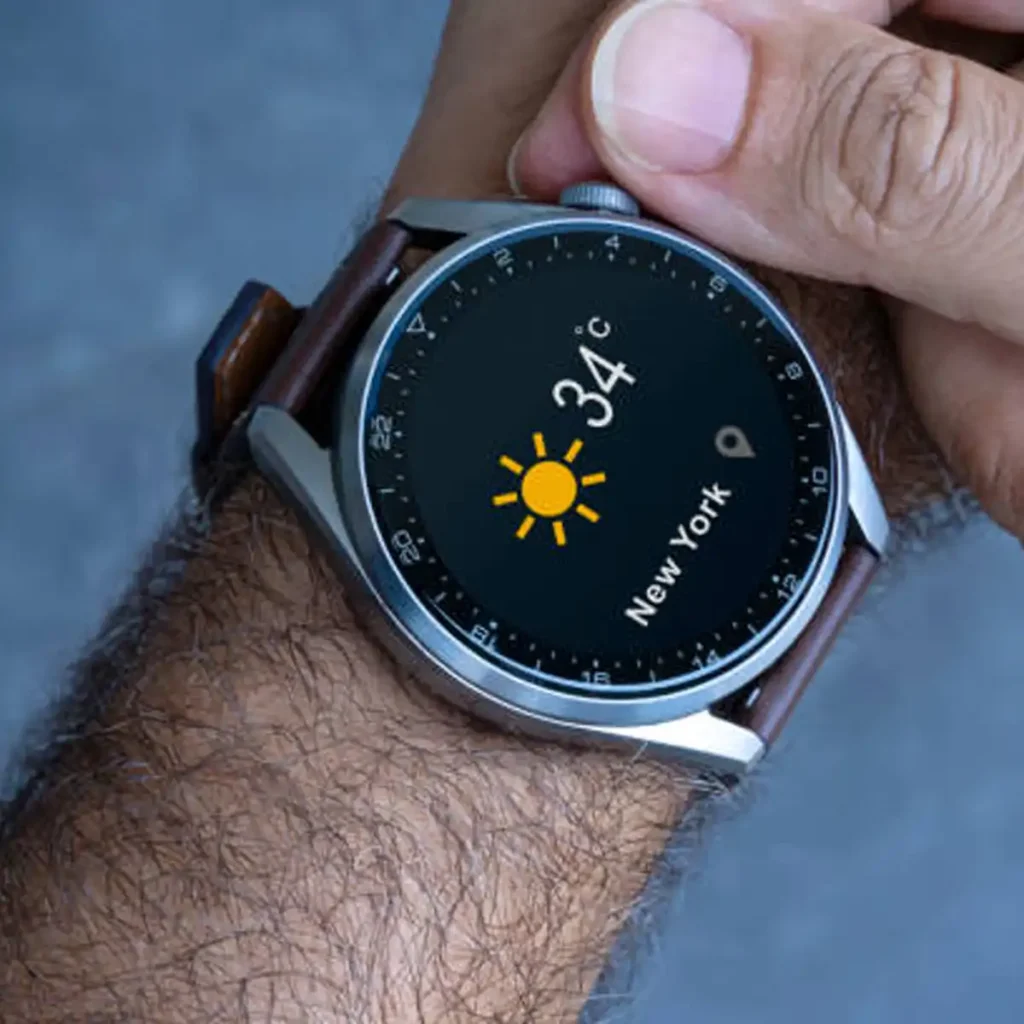
Specialist providers supply ultra-thin NFC modules that can be stitched into leather watch straps or slotted into bracelet clasps. This allows owners to transform a cherished mechanical watch into a contactless device by simply swapping the strap, retaining the timepiece's character while adding modern convenience. In London, this appeals to collectors who would never replace a vintage Omega or Rolex with a smartwatch but still want the tap-to-pay experience.
At a more casual level, braided bracelets and festival-friendly bands now hide payment fobs inside woven nylon or leather. These entry-level tech jewellery gifts tend to sit in the £45 to £80 range and are popular choices for teenagers, gig goers and travellers who prefer not to carry wallets or phones in crowded spaces.
Perhaps the most poetic expression of passive tech in jewellery is the NFC locket. Traditional gold or silver lockets have long carried tiny photographs or curls of hair. In 2025, makers embed small NFC chips behind enamel or beneath set stones. When a smartphone taps the locket, it can launch a private online photo album, play a recorded message or open a secure page containing documents. For bereaved families, new parents or long-distance couples, this turns a classic motif into a digital heirloom, capable of holding far more memory than its physical dimensions suggest.
Where To Buy Tech Jewellery Gifts In London
For UK buyers, the shopping environment is often as important as the specification sheet. London offers several distinct ecosystems in which to explore tech jewellery.
Hatton Garden remains the natural starting point for bespoke projects. Here, lab-grown diamond specialists, generative design studios and traditional bench jewellers coexist within a few streets. An appointment typically includes time at a CAD workstation, discussion of stone options and the chance to handle wax or resin versions of the proposed piece. For tech-forward yet deeply personal gifts, this is where health-tracking bands can be integrated into engagement rings, or where NFC modules can be hidden beneath the engraving.
Department stores such as Selfridges on Oxford Street provide a more hands-on retail experience for smart rings and connected accessories. In the technology and jewellery halls, visitors can compare finishes under consistent lighting, try on sizing kits for rings, and feel the difference between titanium, ceramic, and solid gold on the hand. This is particularly useful when choosing biometric rings, where comfort and fit directly affect data quality.
Finally, an increasing share of innovation-centred brands operate direct-to-consumer online, supplementing web sales with short-term pop-ups in central locations. Atmospheric diamond makers host installations in venues across Soho and the Strand, while safety bracelet and connected pendant brands often rely on digital storytelling and social media rather than on permanent brick-and-mortar stores. For buyers willing to research, these channels offer access to niche tech jewellery before it reaches mainstream retail.
Matching Tech Jewellery Gifts To Different Recipients
Given the breadth of the 2025 market, it helps to frame tech jewellery gift ideas around the person rather than the product.
For the health-conscious executive, an ultra-luxury precious-metal smart ring that tracks sleep, recovery, and movement without a bright screen is a compelling choice. It integrates effortlessly with formal dress codes, replaces plastic fitness bands and provides a constant stream of actionable data through a polished app, with no need to charge daily.
For the eco-luxury advocate, a carbon-diamond solitaire pendant or a lab-grown engagement ring set in recycled metals sends a powerful message. It combines visible quality with a backstory of climate innovation and responsible sourcing, delivering both emotional and ethical resonance.
For the protective parent choosing for a daughter heading to university, a discreet safety bracelet that doubles as fashion jewellery offers reassurance without undermining independence. The gift says “I want you to be safe” in a way that respects the recipient’s style.
For the tech minimalist commuter, a passive payment ring in ceramic or wood eliminates the need to fumble for contactless cards on the Tube. It is the kind of present that quietly improves daily life every time the wearer taps in and out of barriers.
For the long-distance partner, a pair of connected pendants or bracelets that light up and vibrate with a tap can feel more intimate than another video call. These pieces act as small, shared rituals that punctuate busy days.
For the design aficionado, generative gold or silver pieces, or a home visit from a CAD-equipped bespoke jeweller, will be more meaningful than any finished object chosen off the shelf. Here, the act of co-creation becomes part of the present.
Why Tech Jewellery Gifts Capture The Future Of Luxury
The rise of tech jewellery in 2025 shows that technology and sentiment no longer occupy separate categories. When electronics are miniaturised, casing materials are elevated, and sustainability is taken seriously, circuits and carbon capture become part of the language of love, care and celebration.
For London and the wider UK market, this convergence offers retailers and makers a way to remain globally competitive while staying rooted in traditional skills. Bench jewellers collaborate with software developers. Atmospheric diamond engineers work alongside stone setters. Safety specialists design charms that would sit comfortably in fashion editorials.
For gift buyers, the appeal lies in layered meaning. A piece can be beautiful, useful and ethically progressive at once. It can protect the wearer on a night out, monitor their recovery from a stressful week, pay for their coffee, lock their car, or store cherished voices and images, all while presenting itself as a classic ring, pendant or bracelet.
As the decade progresses, it is likely that the line between “tech” and “jewellery” will blur further. Contactless modules may become standard in premium watch straps. Lab-grown and atmospheric stones may dominate new diamond sales. Smart rings may quietly replace many basic fitness bands. For now, the tech jewellery gifts outlined here offer a snapshot of a market at full stride, where the most thoughtful present you can give may be one that sparkles on the surface while working tirelessly beneath it.
Continue Reading
All articles →Newsletter
Stay updated on Digital News