Gold has opened 2026 with a surge that is forcing a rethink of what investors are buying when they choose bullion. On January 14, 2026, Reuters reported spot gold hitting a record intraday high around $4,639 per ounce before easing back, as markets reacted to softer US inflation data, shifting rate cut expectations, and an uneasy geopolitical backdrop. In Britain, where the metal is priced in pounds, currency moves add a powerful second lever.
Many readers are now asking whether gold can reach £3,700 within the first quarter of 2026. A move of roughly 7% in 3 months is demanding but not implausible in a market already moving on more than one engine. The current rally is fed by trade policy that risks lifting prices while constraining growth, political pressure around central bank independence, and a steady shift in reserve management that is keeping demand firm even at record highs.
Why the £3,700 question is suddenly mainstream
Forecasts are always easier to publish than to trade, but it is notable how quickly prominent institutions have pulled higher reference points into the public domain. Citi strategists, in a note reported on January 14, 2026, raised their 0 to 3-month target for gold to $5,000 per ounce, citing heightened geopolitical risks, reported tightness in physical markets, and renewed uncertainty over Federal Reserve independence. A number like $5,000 matters because it provides a simple anchor for investors and risk managers and can become a focal point for positioning when markets are already trending.
For UK readers, the translation from $5,000 into pounds is not abstract. With sterling trading in the mid $1.30s in mid-January, Reuters put the pound around $1.3471 on January 13, 2026. At that exchange rate, a $5,000 gold price implies a sterling price close to £3,700, before retail premiums and dealing costs are considered. The UK debate is therefore partly about gold itself, and partly about the resilience of sterling in a quarter when investors are watching the Bank of England move from restraint to easing.
Tariffs and trade policy are feeding a stagflation fear.
The sharpest macro theme in this cycle has been the return of trade policy as a core economic variable. The US reciprocal tariff regime announced on April 2, 2025, was implemented through executive action, with the White House later issuing further modifications to the rates. Reuters described the structure as a baseline 10% tariff alongside higher reciprocal rates for selected partners. Whatever the political branding, tariffs function economically as a tax that pushes costs through supply chains, while simultaneously discouraging trade flows.
That combination makes tariffs a classic stagflation trigger. Prices can rise even as growth slows, because the pressure comes from cost and friction rather than demand overheating. In that setting, central banks face a narrower corridor. Raise rates sharply, and the risk is recession, especially where debt loads and housing sensitivity are high. Cut rates too soon, and inflation expectations can drift upwards. Gold benefits from that tension because it is most attractive when real returns look thi,n and uncertainty feels durable.
Recent US data have added fuel. Reuters linked the latest leg of the gold rally tsofter-than-expecteded US inflation readings, which increased market confidence that rate cuts could arrive later in 2026. Lower expected rates reduce the appeal of yield-bearing assets and tend to raise the value of hedges in a portfolio designed to survive multiple macro outcomes.
A test of Fed independence is rewriting the risk-free story.
If inflation and tariffs supply the macro backdrop, political pressure on institutions supplies the spark. Over the past week, markets have been asked to price a question that is usually left unspoken, namely, whether the Federal Reserve can set policy without fear of retaliation. Reuters reported on January 12, 2026, that the US Department of Justice threatened to indict Fed Chair Jerome Powell over comments to Congress about a building renovation project, a development that raised concern about central bank independence and the long-term outlook for the dollar.
Gold’s sensitivity to this story is practical rather than symbolic. Modern finance rests on a hierarchy of trust, with sovereign bonds and central bank credibility near the top. If investors decide that policy is being pulled toward short-term political objectives, they start to demand a risk premium for holding claims in that system. Some of that premium can show up as higher bond yields, and some as a rotation into assets that are not anybody’s liability. Gold is the most liquid of those assets and often attracts flows when institutional boundaries are tested.
Currency markets have already reflected the discomfort. Reuters reported that the dollar fell after the threat of an indictment, with investors reading it as a challenge to the Fed’s independence. Even if the episode is resolved, the signal to markets is that political risk is no longer confined to smaller economies. In a world where institutional guardrails are questioned in public, gold can behave less like a simple inflation hedge and more like insurance.
Sterling adds its own accelerant.
Gold is a global asset, but UK holders experience it through the pound. Sterling has been relatively stable in recent sessions, but analysts have described it as more supported by global uncertainty than by domestic strength. Reuters reported on January 13, 2026, that sterling was steady at about $1.3471, with attention focused on US political risk rather than upbeat UK fundamentals.
The UK macro backdrop remains awkward. Official data show CPI inflation at 3.2% in the 12 months to November 2025. That is down from recent highs, but still above the 2% target, and it sits alongside a wider debate about sluggish productivity and weak growth. The Bank of England has signalled that the disinflation process could reach its target earlier than previously expected. Reuters reported on January 14, 2026, that Monetary Policy Committee member Alan Taylor expected rates to keep falling as inflation moves towards the target, with the Governor also pointing to a return to 2% around April or May 2026.
For sterling, that path matters. When investors expect rates to be cut, the currency can lose support, particularly if the easing story is not matched by stronger growth. In that environment, a rising dollar gold price can translate into a faster-rising sterling gold price, even without a dramatic fall in the pound.
The maths that links $5,000 gold to £3,700 in Britain
The simplest way to understand the £3,700 target is to treat it as an exchange rate problem with a commodity overlay. With gold near $4,632 on January 14, 2026, as reported by Reuters, the market is already within sight of $5,000. Citi’s short-term target is $5,000. Sterling is around $1.34-$1.35. These are not extreme assumptions.
A few scenarios illustrate the sensitivity.
If gold reaches $5,000 and sterling holds near $1.35, the implied price is about £3,704.
If gold reaches $4,900 and sterling slips to $1.33, the implied price is about £3,684.
If gold holds near $4,650 but sterling drops to $1.26, the implied price is about £3,690.
These are not forecasts; they are translations. They show that the £3,700 level can be reached through different combinations, including a slightly lower gold price combined with a weaker sterling. They also show why UK readers are right to watch the pound as closely as the metal.
There is an additional layer for households and smaller investors. The headline spot price is not always the price that appears on a dealer’s screen for coins and smaller bars. In periods of heavy demand, retail premiums can widen, meaning the price paid for physical gold can overshoot the benchmark even if the benchmark moves more steadily.

Physical market strains and the London connection
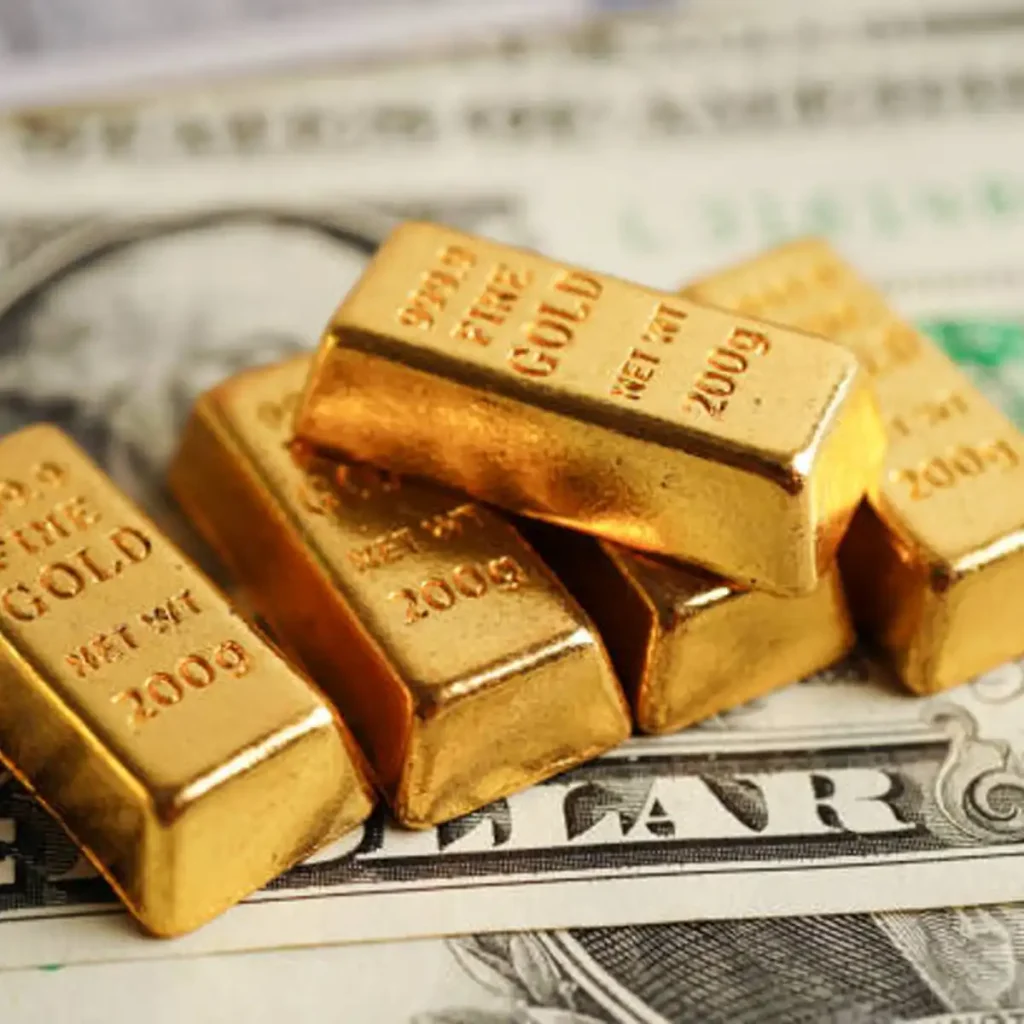
In the modern bullion trade, London’s importance lies not only in price discovery but in settlement conventions. The London Good Delivery standard is the backbone of wholesale liquidity, with the LBMA setting weight specifications for the bars used in settlement. When commentators talk about physical tightness, what they often mean is tightness in deliverable material that meets these wholesale standards.
Fun fact: London Good Delivery gold bars typically weigh close to 400 troy ounces, and LBMA specifications allow a range from 350 to 430 fine troy ounces.
Proof of scarcity is difficult because the market is largely over-the-counter, but there are credible signals of stress. Citi’s stated rationale for raising its short-term target included ongoing physical market shortages. Separately, Reuters has described how earlier tariff worries prompted metal outflows to the United States, tightening attention on London vault data and on the amount of liquid inventory available for settlement. Even the plumbing is being updated, with Reuters also reporting that the LBMA’s gold bar database will become mandatory for listed refineries from 2027, building on voluntary reporting beginning in January 2026.
For the £3,700 discussion, the physical angle matters because it affects repricing speed. When deliverable supply is perceived as tight, buyers may be less willing to wait for pullbacks, and sellers may be less willing to provide liquidity at the margin. That dynamic can turn a steady trend into a sharper climb.
Central banks keep buying, and the floor looks higher.
The most underappreciated source of demand remains the official sector. The World Gold Council reported that central banks have accumulated over 1,000 tonnes of gold in each of the last 3 years, a marked acceleration compared with the prior decade. This matters because central bank buying tends to be less sensitive to short-term price moves. It is usually driven by reserve strategy, diversification, and risk management.
That participation can change market structure. When a consistent buyer is present in size, dips can be shallower,r and recoveries can be quicker because the pool of price-insensitive demand is larger than it was in earlier cycles.
In the background sits the broader geopolitical logic. Tariffs, sanctions, and the politicisation of payment channels have pushed some states to reconsider which assets count as neutral. Gold is not a perfect solution, but it is hard to freeze, easy to pledge, and widely recognised, which helps explain why official purchases have stayed elevated through multiple price cycles.
What technical traders are watching now
Fundamentals explain why gold is being bid, but not when momentum might accelerate or stall. In sterling terms, prices have pushed to record levels, with UK charts showing recent highs close to £3,450 per ounce in January 2026. In markets, round numbers often act as behavioural markers. For UK participants, £3,500 is a line that can trigger both profit taking and new allocations, depending on the mandate.
The current backdrop also supports a breakdown in the kind of correlation that makes technical levels more fragile. Reuters has described the rally as resting on both geopolitical uncertainty and interest rate expectations. When more than one narrative is pushing in the same direction, setbacks can be brief, and breakouts can become self-reinforcing as risk managers adjust hedges and systematic strategies respond to trend strength.
What could knock the forecast off course
There are realistic ways to delay or avoid £3,700.
A global liquidity shock could produce forced selling. Gold can fall in such episodes, at least initially, because investors sell what they can to raise cash, even if they intend to buy back later.
A trade policy reversal could remove a key source of support. The reciprocal tariff regime has been politically contentious since its launch, and its parameters have been modified over time through executive action. If tariffs were credibly rolled back or neutralised through a settlement, inflation fears could ease, and growth fears could soften, thereby reducing demand for hedges.
Sterling strength is another risk for the UK price. If UK inflation falls faster than expected and the Bank of England turns less dovish than markets assume, the pound could strengthen and reduce the local gold price even if the global gold price rises. Reuters has reported that inflation could reach the target by April or May 2026.
Finally, expectations can run ahead of reality. Citi’s $5,000 target is influential, but it remains a forecast. Markets can overshoot targets and stall below them, particularly if positioning becomes crowded.
What to watch through April 2026
Readers looking for a disciplined way to assess the £3,700 scenario can focus on a small set of indicators.
First, watch how the US institutional story evolves. Further escalation in pressure on the Fed, or any event that deepens doubts about independence, can sustain demand for insurance assets.
Second, watch tariff policy and trade-retaliation signals, as they shape the balance between inflation and growth risks.
Third, watch sterling’s ability to hold in the mid $1.30s, because the currency translation can be decisive for the UK gold price.
If these forces align, £3,700 is a plausible waypoint in a market already repricing credibility. Gold’s behaviour in early 2026 looks less like a single trade and more like a seismograph, registering stress in parts of the global financial system that investors assumed were stable.